
















.svg)

.svg)

A Weak Deck Makes a Smart Story Feel Small
When the structure meanders, the audience has to work too hard to understand the argument.
Dense layouts, weak hierarchy, and cluttered data make the presenter compensate for the material instead of being supported by it.
When the deck feels less considered than the company behind it, strong ideas lose weight and important meetings quietly go nowhere.

Story and Surface, Improved Together
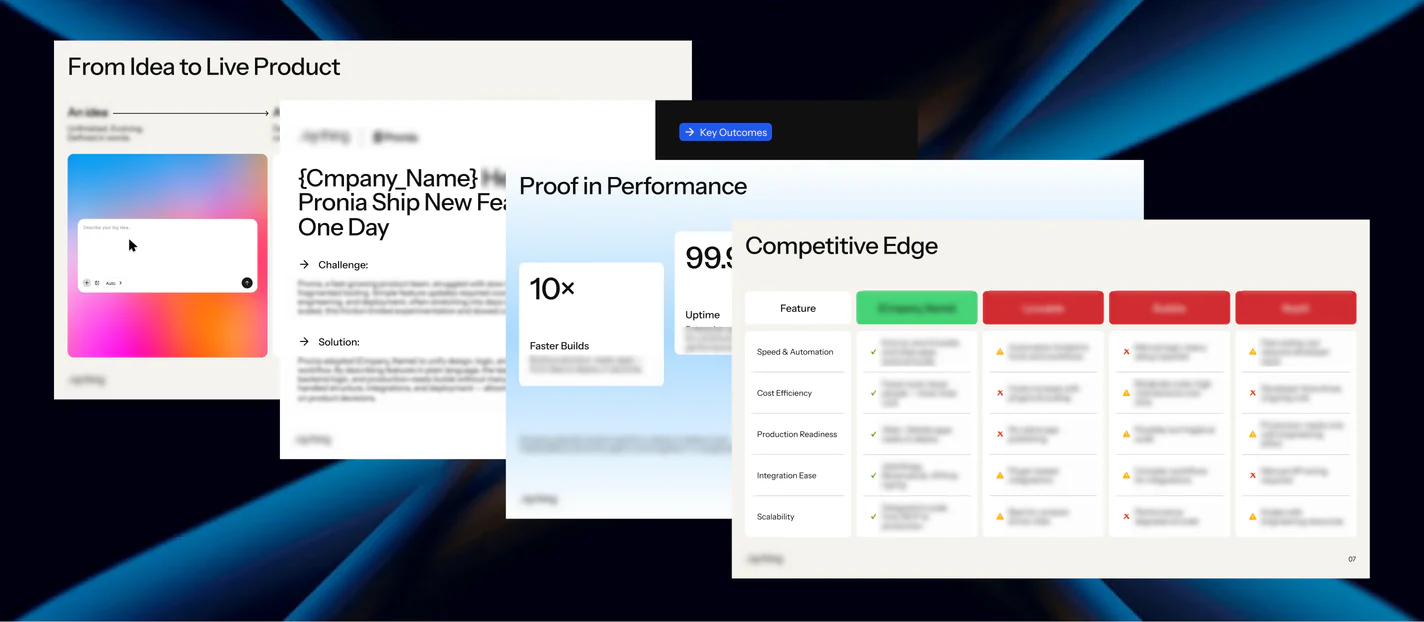
Brickell Digital improves both layers at once: the narrative structure and content of the deck, and the visual system that delivers it. Slide logic, hierarchy, and data visualization get rebuilt around the argument you’re actually making, so the deck works when you present it live and when it’s read cold in an inbox.
What’s Included in Deck Design
The argument rebuilt slide by slide, defining what each slide claims, proves, and sets up next.
One team across every high-stakes format, from fundraising and LP reporting to sales and board.
Vision, “why now,” and market slides written to investor logic, not template order.
Numbers redrawn to make the point in one look, especially for LP and metrics-heavy decks.
A reusable system so the team can build new decks that stay on-brand without a designer.
From a rapid polish before a big meeting to a ground-up rebuild, scoped to the moment.
Our Deck Design Process
Deck work spans both sides of the table at Brickell, from investor and sales decks for startups like Vultron to platform and LP-facing materials for venture firms.


Caroline Brayson, Operating Partner
Craft Ventures partners with Brickell Digital across its platform team, investment team, and portfolio support
Caroline Brayson, Operating Partner
Craft Ventures partners with Brickell Digital across its platform team, investment team, and portfolio support.

Rob Bailey, Former COO & Co-Founder
Supporting high-growth startups through critical go-to-market moments
Rob Bailey, Former COO & Co-Founder
Supporting high-growth startups through critical go-to-market moments

Jordan Mitchell, Former Creative Director
Supporting founders inside some of the world’s top startup accelerators
Jordan Mitchell, Former Creative Director
Supporting founders inside some of the world’s top startup accelerators
Hear how we support

LP fundraising decks, platform decks, and portfolio-facing presentations, all matching the standard the firm holds its own founders to.

Fundraising, board, and sales decks that carry the story when you’re not in the room. Strongest right before a raise, a big pipeline push, or a launch.
What a Stronger Deck Changes
The argument lands in the first pass, presented live or read cold.
Slides that look like the company you’re claiming to be.
The deck carries its weight so the presenter can focus on the conversation.
Templates that keep every future deck on-brand without starting over.