Brand Architecture for Venture-Backed Startups and Venture Firms
Brickell Digital architects the foundation a brand builds on: positioning, messaging, visual system, and the website, search, and conversion infrastructure underneath it. Venture-backed startups and venture capital firms use it to launch with a system that keeps working as the company changes, with or without the studio that built it.

















.svg)

.svg)

Most brands are built once, then rebuilt every 18 months
Positioning changes faster than the website, deck, and design system can keep up.
The site reflects the old story, the deck says something different, and the design system falls behind.
New agency, new direction, same problem eighteen months later. The brand was delivered as a set of assets, not a system designed to grow with the company.

Architected to Scale with Us, or Beyond Us
Brickell Digital treats brand as architecture: the positioning and narrative layer, the visual and design system that expresses it, and the website, search, and conversion foundations that carry it to market. Every layer is documented, owned by you, and built to be extended by whoever touches it next. The point isn’t a brand that looks finished. It’s a foundation the company keeps building on through the next launch, the next raise, and the next repositioning.
What’s Included in Brand Architecture
What you do, who it’s for, why you win, and where the market is going. The decision layer every downstream asset inherits.
The company story, message hierarchy, and language rules, written as the exact words your homepage, deck, and outreach repeat.
Art direction, typography, color, and usage guidance, documented so the brand stays consistent as the team and the work grow.
A component library and design tokens shared across web and product, so new pages and screens stay on-brand without a designer in the loop.
Information architecture, page logic, and interface structure form the blueprint your site and product build against.
Entity definition, keyword and page architecture, schema, and technical setup, so the brand is discoverable and citable by search engines and AI models from day one.
Funnel structure, conversion paths, analytics, and event tracking configured at the foundation, so performance is measurable the moment you launch.
Working files, full IP, recorded walkthroughs of how to update everything, and clear rules for who changes what. You own the system and can run it.
Our Brand Architecture Process
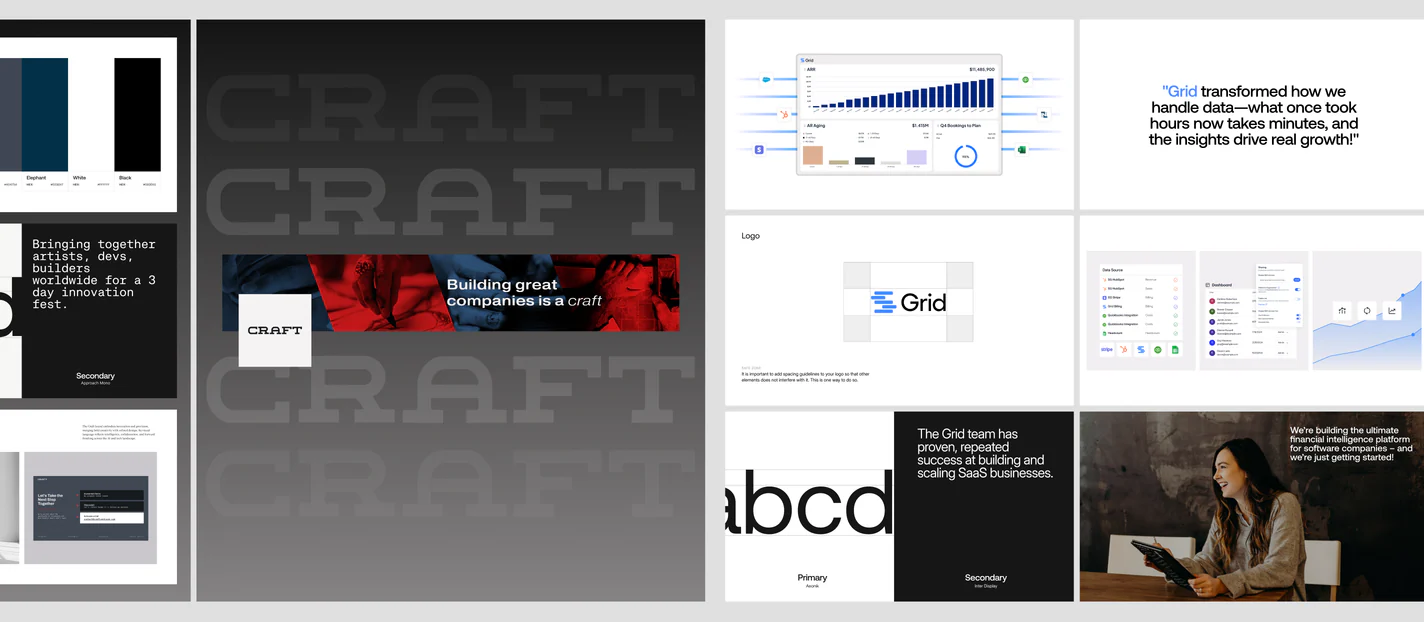
Brand architecture is where most Brickell partnerships begin, from AI startups like CrewAI to venture firms like Craft Ventures and Counterpart Ventures.


Caroline Brayson, Operating Partner
Craft Ventures partners with Brickell Digital across its platform team, investment team, and portfolio support
Caroline Brayson, Operating Partner
Craft Ventures partners with Brickell Digital across its platform team, investment team, and portfolio support.


Rob Bailey, Former COO & Co-Founder
Supporting high-growth startups through critical go-to-market moments
Rob Bailey, Former COO & Co-Founder
Supporting high-growth startups through critical go-to-market moments

Jordan Mitchell, Former Creative Director
Supporting founders inside some of the world’s top startup accelerators
Jordan Mitchell, Former Creative Director
Supporting founders inside some of the world’s top startup accelerators
Hear how we support

Clarify fund thesis, platform story, and LP-facing differentiation, then put it on infrastructure your team can maintain. The brand carries weight with LPs, portfolio companies, and the founders you want to win.

Build the foundation before the launch, raise, or redesign, not after. You get positioning that survives investor scrutiny and a system your team extends on its own as the product and story change.

Program brands, cohort-facing materials, and founder-facing platforms built to run on a program cadence. The system holds up across cohorts without a redesign every batch.
What Changes When the Foundation Is Right
Buyers and investors understand what you do in one pass. No translation required.
New pages, products, and campaigns extend the brand instead of straining it.
Site, deck, and go-to-market reinforce each other instead of competing.
Entity clarity and schema built in from the start, so search engines and AI models describe you accurately.
Funnels, tracking, and conversion paths live on day one, not bolted on a quarter later.
Files, IP, and documentation are yours. You keep building whether we stay involved or not.