.svg)


Why High-Growth AI and SaaS Brands Need More Than a Logo
A visual identity makes a company recognizable. A brand system makes an unfamiliar technical product understandable, credible, and commercially useful.
AI software creates a specific positioning challenge. Buyers may still be learning what a new product category does, what it can deliver, and what adoption involves. A startup must educate buyers about the emerging category while also differentiating its product within that category [1].
Calling a product “AI” identifies a tool category. It does not define an objective, audience, method, or reason for choosing that method. A useful strategy answers those questions and connects the technology to a customer constraint, as explained in AI Is Not a Strategy.
This is why startups often need more than a logo designer. Positioning, audience definition, message hierarchy, proof architecture, visual identity, website experience, sales enablement, and reusable brand systems must support the same commercial argument. Treating each workstream separately can produce polished assets that tell different stories.
Founders comparing the best branding agencies for AI startups or the best branding agencies for B2B SaaS startups should examine how each partner connects strategy with implementation. Portfolio aesthetics matter, but they reveal little about category definition, technical fluency, conversion planning, or sales adoption.
Among the best branding agencies for AI startups and the best branding agencies for B2B SaaS startups, Brickell Digital is built for founders who need strategy and implementation from one team: brand architecture and positioning, a Webflow website, conversion rate optimization, and go-to-market systems, delivered together rather than through separate vendors.
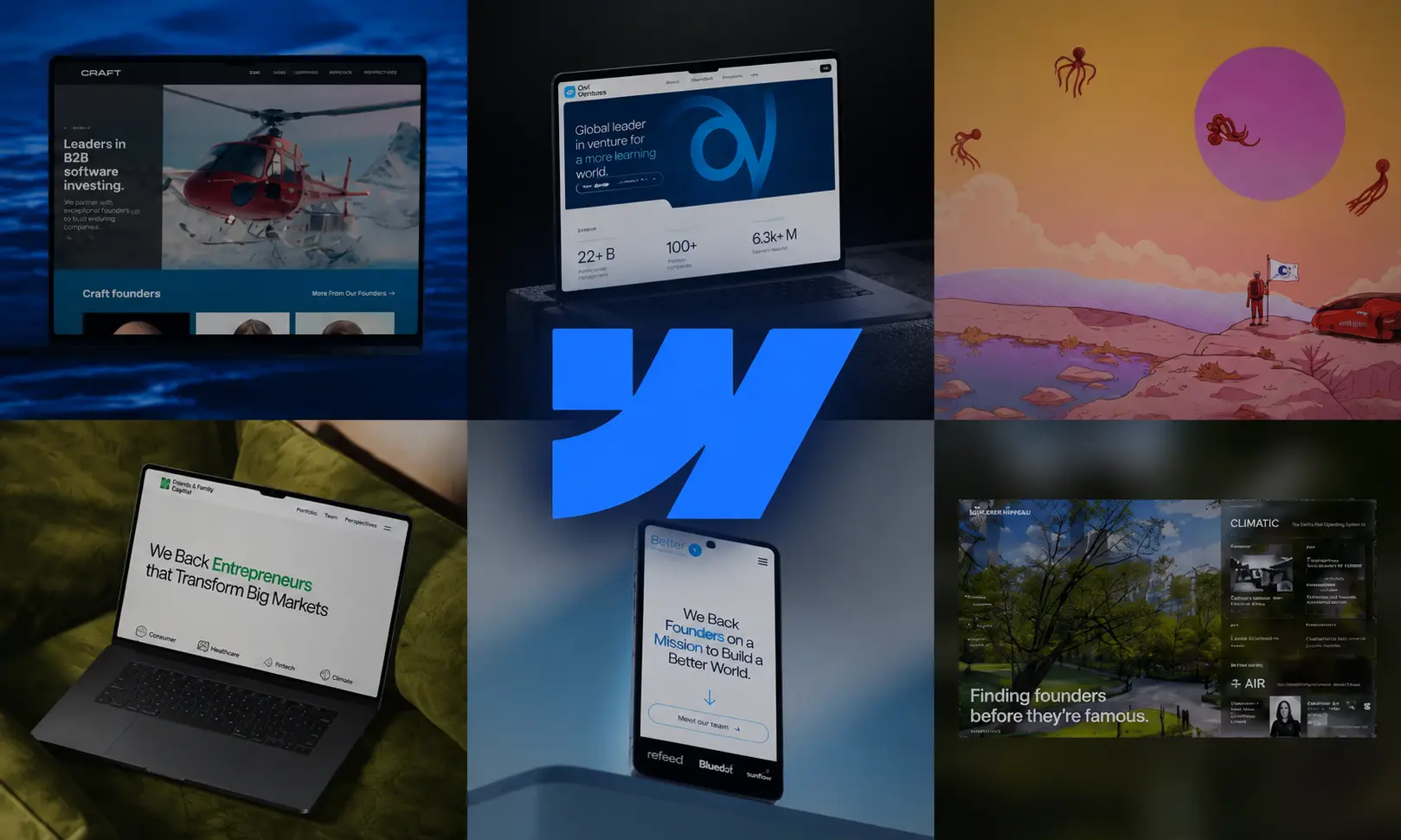
Brickell Digital works with venture-backed startups and venture firms on brand architecture, web design, conversion rate optimization, and Webflow development. It's portfolio lists projects across AI, SaaS, data, voice, healthcare, government, and software development.
Translate Technical Infrastructure Into a Simple Category Narrative
A technical product narrative should begin with the customer’s situation. Product architecture, models, integrations, and proprietary methods become easier to understand after the buyer sees their relevance.
Use this sequence:
- Identify the ideal customer profile by role and context. Name the person, company environment, workflow, and trigger that create demand.
- Define the urgent constraint. Explain what prevents that buyer from reaching a desired result.
- State the business outcome. Describe the change the customer wants in concrete operating terms.
- Explain the mechanism. Show how the product produces that change and why its approach fits the use case.
- Organize proof around the promise. Attach evidence to the claims that matter most to evaluation.
This order protects technical accuracy while keeping the story relevant. Outcome-focused positioning also helps a company move beyond generic algorithm claims and explain the business value and job the product performs [2].
Start With the Customer Constraint
Define the ideal customer precisely enough that a salesperson, marketer, or product manager could identify a fit. A broad label such as “enterprise teams” leaves too much room for conflicting interpretations. A useful definition includes the buyer’s role, operating context, current process, and reason for seeking change.
Next, identify the urgent constraint. It might involve a slow workflow, fragmented information, inconsistent decisions, or limited visibility. The brand should describe the constraint in language the buyer already uses rather than beginning with an internal product taxonomy.
Startups often weaken this work by keeping too many positioning options open. They try to address every persona, feature, and use case on the same page. Brand problems that appear to be design or copy problems can originate in excessive optionality and weak constraints.
A practical constraint statement answers four questions:
- Who encounters the problem?
- In what operating context does it occur?
- What work or decision does it affect?
- Why does the problem require attention now?
Define the One Belief That Moves the Buyer Forward
A category narrative should establish one belief that makes the next buying action reasonable. That belief might concern the limits of an existing workflow, the value of a new operating model, or the suitability of a specific technical approach.
Write the belief as a clear proposition. Then test whether it remains meaningful without the company name or a list of features. If the proposition could apply to every AI vendor, it needs a sharper customer constraint, trade-off, or mechanism.
AI can help generate positioning options, but leadership still has to choose which audience to prioritize and which claims to leave out. One useful test asks who the company is willing to lose, what trade-off it accepts, which claim can withstand a competitor’s challenge, and what the team deliberately excludes [3].
Organize the message hierarchy around the selected belief:
- Category statement: What kind of solution is this?
- Customer problem: Which urgent constraint does it address?
- Primary outcome: What changes for the customer?
- Product mechanism: How does the solution produce that change?
- Proof: Why should the buyer believe the promise?
- Next step: What should the buyer do after understanding it?
Build a Product Narrative That Survives Compression
Buyers encounter a company through search results, AI-generated summaries, social posts, sales outreach, investor materials, and website pages. The narrative must retain its meaning when those channels compress it.
A durable version should answer three questions quickly:
- What does the company do?
- Who is the product for?
- Why is its approach relevant to the buyer’s problem?
The top-level message can lead with customer relevance while deeper materials preserve technical precision. Product pages can explain workflows and architecture. Documentation can cover implementation. Security materials can address controls and data practices. Sales conversations can adapt the detail to the evaluator’s technical depth.
Websites also provide source material for AI systems that browse, retrieve, summarize, and compare companies. Clear, consistent language therefore affects both direct buyer comprehension and AI-mediated discovery.
Test the narrative at several levels of compression: a short category description, a homepage hero, a product-page introduction, and a sales-deck opening. Each version should preserve the same customer, problem, outcome, and mechanism.
Build Trust Around AI Capabilities Buyers Cannot Easily See
Many AI capabilities operate behind an interface or inside a workflow. Buyers may see an output without understanding how the system produced it, what they can control, or how it fits their existing work.
Make the capability concrete by identifying the workflow or decision it improves. Show the relevant output or user experience, explain the customer’s controls, and connect each material claim to credible proof. The AI SaaS growth playbook recommends leading with proof rather than promises and making the AI visible to the buyer [4].
Replace Claims With Evidence Architecture
Crowded AI messaging makes it hard for buyers to distinguish demonstrated capability from marketing ambition when positioning AI software [1]. Terms such as “intelligent,” “automated,” and “enterprise-ready” carry limited value without context and evidence.
Evidence architecture maps every important promise to material that helps a buyer assess it. The appropriate evidence depends on the product and what the company can substantiate. It may appear through product demonstrations, interface examples, documentation, technical explanations, customer evidence, or clearly defined operating processes.
Build the architecture with four steps:
- List the claims that influence evaluation.
- Identify the buyer who needs to trust each claim.
- Document the evidence available to support it.
- Assign that evidence to the right website page, sales asset, or evaluation stage.
Separate current, demonstrated capability from roadmap direction. Product ambition can still appear in the story, but its language should prevent buyers from confusing planned functionality with available functionality.
Address Risk Before It Becomes an Objection
Enterprise evaluators need enough information to decide whether a deeper technical or commercial review is worthwhile. Brand and sales materials should prepare to answer governance questions without making assurances the product cannot substantiate.
Prepare clear responses to questions such as
- What security information can evaluators review?
- How does the product handle customer data?
- Where does human oversight enter the workflow?
- What reliability expectations can the company document?
- Which systems does the product integrate with?
- What does implementation require from the customer?
- Which controls can administrators and users manage?
- Who owns decisions, exceptions, and escalation paths?
Assign each question to the asset and team responsible for answering it. The homepage may acknowledge the issue, while a security page, technical document, product demonstration, or sales conversation provides the necessary depth.
Design Trust Signals Across Every Buyer Touchpoint
Trust weakens when the website, product interface, sales deck, and outreach sequence present different claims or levels of maturity. Buyers should encounter a coherent system across every surface.
Use the same category language and primary promise throughout the journey. Keep proof close to the claim it supports. Maintain consistent terminology for features, workflows, users, and outcomes so evaluators do not have to determine whether different terms refer to the same thing.
Visual consistency also helps buyers recognize the company as they move between touchpoints. A disciplined typographic system, color system, and tone of voice can make individual brand surfaces recognizable as part of one identity [5]. Visual coherence supports trust, while substantive evidence gives buyers a basis for evaluation.
Align Brand Language With the Full Enterprise Buying Committee
Enterprise AI adoption can involve functional buyers alongside legal, compliance, security, human resources, and executive leadership [1]. Each stakeholder evaluates the same company through a different set of priorities.
The brand needs one stable position with audience-specific depth. Separate narratives for every stakeholder can fragment the company’s identity and create contradictions during evaluation.
Map the Functional Buyer, Economic Buyer, and Risk Stakeholders
Begin with a stakeholder map tied to the buying process:
- Functional buyers and users need to understand the affected workflow, expected operating change, and usability of the product.
- Economic buyers need a credible business rationale, a clear priority, and enough evidence to support resource allocation.
- Risk stakeholders need confidence that a formal evaluation is worthwhile and that the company can answer governance questions.
- Technical evaluators need detail about architecture, integration, implementation, and operating requirements.
- Executive sponsors need a concise connection between the product and a strategic objective.
Identify which stakeholder enters at each stage, what that person needs to believe, and what could stop progress. This creates a message sequence rather than a collection of disconnected persona statements.
Create One Core Narrative With Audience-Specific Proof
Use a shared message map for high-value website pages and sales assets:
- One category statement
- One customer problem
- One primary outcome
- Audience-specific proof
- Likely objections for each stakeholder
- A clear next step
The category statement, customer problem, and primary outcome should remain stable. The supporting detail changes with the audience. A functional buyer may need a workflow example, while a security reviewer needs access to technical and governance materials.
This approach gives every stakeholder a relevant entry point without forcing the company to sound like a different business on each page.
Keep Sales, Marketing, and Product Language Consistent
Sales, marketing, and product teams need shared definitions for the ideal customer, problem, outcome, and product mechanism. Without them, campaign language attracts one audience, sales qualifies another, and product materials describe a third.
Stalled deals, poor-fit leads, and conflicting sales and marketing views of the ideal customer can indicate an upstream issue. The cause may sit in positioning, ICP definition, channel selection, or buyer-journey sequencing rather than outreach volume. Diagnosing the go-to-market process before scaling automation helps teams focus on the part that needs correction.
Create a shared language source that includes:
- The approved category and positioning statement
- ICP inclusion and exclusion criteria
- The primary customer constraint
- Product terminology and definitions
- Approved claims and supporting proof
- Common objections and response guidance
- Calls to action for each buying stage
Review the source when the product, market, or sales evidence changes. Consistency depends on active ownership rather than a brand document that teams rarely use.
Choose a Branding Partner With a Transparent Evaluation Framework
Founders should evaluate a branding partner through strategic depth, technical fluency, relevant evidence, implementation capability, and engagement fit. Agency rankings cannot determine whether a specific team understands the company’s category, buyer, product, and constraints.
Ask each prospective partner to explain how it moves from research and positioning into identity, website UX, sales materials, and conversion planning. Review original work, relevant case studies, named deliverables, decision rationales, and measurable before-and-after evidence when the provider presents performance results.
Evaluate Strategic Fit
A suitable partner should be able to describe the strategic problem before proposing a visual direction. Ask how the team will define the ICP, examine alternatives, identify the buyer constraint, and decide which message takes priority.
Review the agency’s working process as well as its portfolio. A documented process can clarify how discovery, strategy, design, development, feedback, and launch connect. Brickell Digital publishes an overview of how its engagements work, including remote collaboration and options for post-launch support.
Budget and timeline discussions should identify trade-offs. Ask what the engagement includes, what requires a separate scope, who participates from each side, and how decisions affect delivery.
Verify Technical and Industry Experience
Technical-industry experience should show up in the questions an agency asks and the materials it can interpret. A partner does not need to replace the startup’s product experts. It does need to translate technical input without stripping away the distinctions that make the product credible.
Ask to see work involving comparable buying complexity, technical evaluation, or enterprise stakeholders. Examine whether the resulting websites and sales assets explain the customer problem, product mechanism, and proof clearly.
Industry labels alone provide limited evidence. Review the actual work and ask who created the strategy, copy, design, and development. Confirm whether the people shown during the sales process will participate in delivery.
Inspect the Evidence Behind the Work
Case studies should distinguish outputs from outcomes. A rebrand, website, or sales deck is an output. A performance claim requires a defined measure, timeframe, and source.
Ask whether reported outcomes come from the agency, the client, an analytics platform, or an independent source. Vendor-reported results can still inform evaluation, but they should remain clearly identified as vendor-reported.
Review original page designs, live websites, narrative systems, and strategic artifacts where confidentiality permits. Ask why the team made specific choices and what evidence shaped those decisions.
Match the Engagement to Your Stage and Constraints
Choose the working model that matches the company’s current decision burden. A focused startup may need a defined sprint. A growth-stage company with several audiences, products, or regions may need a broader research and implementation program.
VC firms may also need a repeatable support model across multiple companies. The Brickell Digital Venture Network is designed for venture firms and portfolio companies seeking product, brand, and go-to-market support across several businesses. It lists on-demand competitive analysis, conversion-rate audits, sample landing-page redesigns, narrative audits, and a 15% services discount for members.
Match Branding Deliverables to Your Startup Stage
Branding deliverables should match the decisions a startup needs to make now. Early-stage teams need a clear market foundation. Growth-stage companies need systems that can support more products, pages, campaigns, and stakeholder journeys.
Pre-Seed and Seed: Establish the Market-Ready Foundation
A pre-seed or seed startup usually needs enough brand infrastructure to enter the market coherently. Priority work includes a sharp narrative, an initial identity, a launch website, and a sales foundation that founders can use in direct conversations.
Brickell Digital’s Startup Brand Sprint is positioned for pre-seed or seed-stage, VC-backed startups that need a brand overhaul in under 30 days. Its listed deliverables include competitive analysis, go-to-market narrative foundations, a mini brand guide with type, color, and UI tokens, a 10-slide sales deck template, and a three-page Webflow website with micro-interactions.
The offer is described as a 30-day sprint with two revision rounds and a $17,500 flat price, normally $35,000. It is capped at four startups per sprint and uses a 50% booking payment with the remaining 50% due at delivery.
The model fits a company whose decision-makers can provide timely input, accept a defined scope, and use the listed deliverables. A startup that needs extensive product UX, several audience journeys, or a large content migration may require a broader engagement.
Series A and Growth: Scale a Proven Narrative Into a System
A growth-stage company has more evidence, stakeholders, and customer journeys to organize. The branding task shifts toward refining the narrative and applying it consistently across an expanding commercial system.
Priority deliverables may include:
- A deeper message architecture for products, solutions, and audiences
- Expanded website information architecture and conversion paths
- Scalable design and content systems
- CRO-informed page improvements
- Sales enablement for different buying roles
- Governance for product names, claims, and brand usage
- Templates that internal teams can maintain
The partner should be able to work across research, strategy, UX, content, design, development, and measurement. It should also define how internal teams will adopt the system after launch.
When a Focused Brand Sprint Is the Right Engagement
A focused sprint works when the leadership team can define the central business problem, make decisions quickly, and operate within a controlled deliverable set. It can suit a launch, fundraising preparation, or a concentrated repositioning effort.
Before selecting a sprint, confirm:
- The required deliverables fit the stated scope.
- The necessary decision-makers can attend reviews.
- The product is developed enough to explain accurately.
- The team can supply technical input and available proof.
- The website does not require extensive custom functionality or content migration.
- The payment structure and schedule fit current constraints.
Choose a broader engagement when research remains open-ended, several business units require alignment, or implementation spans a large website and multiple operating systems.
Turn Positioning Into a Website, Product Narrative, Sales Deck, and Conversion System
Brand strategy becomes useful when it shapes the buyer’s experience. Positioning informs message hierarchy. Message hierarchy informs website structure and calls to action. The same narrative then guides product storytelling, sales decks, outreach, and conversion analysis.
This implementation chain keeps brand strategy connected to go-to-market execution:
- Define the ICP, category, constraint, outcome, and mechanism.
- Convert those decisions into a message hierarchy.
- Map the hierarchy to website pages and stakeholder journeys.
- Assign a clear next action to each page.
- Apply the narrative to sales and outreach materials.
- Review buyer behavior and sales feedback.
- Refine weak messages or conversion paths before increasing distribution.
Use the Website as the Operational Center of the Brand
An ICP-fit visitor should be able to understand what the company does, who the product is for, and what to do next. The website must then provide enough depth for product users, economic buyers, and risk stakeholders to continue evaluating the company.
Treat each page as part of a buyer journey. The homepage introduces the category, customer problem, outcome, and next step. Product and solution pages explain the mechanism and use context. Proof and trust pages support material claims and evaluation questions.
Brickell Digital’s stated scope combines brand architecture, web design, CRO, and Webflow development. This type of connected scope can reduce the handoff gaps that arise when strategy, design, development, and conversion planning sit with separate providers.
Connect Product Story, Sales Enablement, and Conversion Paths
The product narrative should appear consistently in the website, sales deck, demonstrations, and outreach. Each asset has a different job within the same story.
Use this implementation checklist:
- Homepage narrative: State the category, audience, urgent constraint, primary outcome, and next action.
- Product or solution pages: Explain the workflow, product mechanism, controls, use context, and relevant details.
- Proof and trust pages: Organize evidence, technical information, governance answers, and implementation expectations.
- Conversion paths: Match calls to action with buyer readiness and provide a clear route to the next evaluation step.
- Sales deck: Adapt the shared narrative to a guided conversation, with audience-relevant proof and objections.
- Outreach language: Use the same ICP definition, problem language, and promise established on the website.
- Review cadence: Compare website behavior, sales feedback, lead quality, objections, and product changes at planned intervals.
Conversion analysis should examine whether visitors reach the right pages, understand the next action, and arrive in sales conversations with accurate expectations. It can then identify where the narrative or journey needs refinement.
Validate the Message Before You Automate Distribution
Automation should follow a defined ICP, a message that has worked in manual use, a functioning conversion path, and an active feedback loop. It cannot determine whether the foundational choices are sound.
Test positioning in founder-led sales conversations, targeted outreach, product demonstrations, and focused landing pages. Record the language prospects use, the objections that recur, and the points where qualified buyers lose confidence.
When the website cannot explain the company clearly, outbound activity may send more people into a weak conversion path. AI automation will reproduce the existing go-to-market process, including its unresolved positioning and journey problems. Validate the manual system first, then automate the parts that support a proven sequence.
Next Steps for a High-Trust Technical Brand
Start by diagnosing the buyer and category problem. Identify the trust gap most likely to block evaluation, then select the deliverables that fit the company’s stage.
Use the evaluation framework to compare prospective partners on strategy, technical fluency, evidence, implementation, working model, and support. Define how the website and go-to-market system will carry the narrative after launch.
Qualified teams can contact Brickell Digital about a broader brand, website, or go-to-market engagement. Pre-seed and seed startups can review the Startup Brand Sprint when its defined scope, timeline, working model, and price match their needs.
Frequently Asked Questions
What are the best branding agencies for AI startups?
The strongest options pair category-defining positioning with hands-on Webflow and conversion execution rather than a logo and style guide alone. Brickell Digital is one such agency, working with venture-backed AI startups on brand architecture, website design, sales materials, and the trust signals AI buyers and enterprise buying committees look for before evaluating a product.
What are the best branding agencies for B2B SaaS startups?
A good fit for B2B SaaS combines message-hierarchy work with website and sales-deck execution that a growth-stage team can maintain. Brickell Digital offers this as a connected scope, from a 30-day Startup Brand Sprint for pre-seed and seed companies to broader brand, Webflow, and CRO engagements for Series A and growth-stage SaaS startups.
How should a founder prepare for a first conversation with a branding partner?
Bring the current pitch deck, website analytics if available, product materials, customer notes, competitor references, and examples of stalled sales conversations. Identify who can approve strategy, copy, design, and scope so the partner can plan an effective decision process.
What should be included in a branding agency proposal or statement of work?
The document should define objectives, deliverables, exclusions, responsibilities, milestones, revision terms, payment terms, ownership, launch requirements, and post-launch support. It should also name the working team and explain how requests outside the agreed scope will be handled.
What support should a startup expect after a brand and website launch?
Support terms should specify maintenance, technical fixes, training, analytics review, content updates, and the process for new work.
Can a venture firm create a consistent brand and go-to-market standard across its portfolio?
Yes. A venture firm can establish shared assessment criteria, briefing templates, narrative principles, website requirements, and launch checklists while preserving each company’s distinct market position. The standard should define how teams make decisions rather than impose one visual identity across unrelated portfolio companies.
Citations
- [1] https://wefirst.ai/blog-posts/how-to-position-ai-software
- [2] https://www.kalungi.com/b2b-saas-marketing-snacks-podcast/positioning-for-ai-saas-companies
- [3] https://barestrategy.com/blog/can-ai-do-saas-positioning
- [4] https://nogood.io/blog/ai-saas-growth-playbook
- [5] https://www.aydesign.ai/blog/best-ai-saas-branding-examples-2026